

A sponsor-funded audio guide uses an agreed commercial message to help cover a venue's guide service while the venue retains content and sponsor approval. For museums and visitor attractions, the practical model separates sponsor audio from interpretation, tells visitors what they are hearing, and settles call costs, data handling, placement, and reporting before launch.
In a nutshell
- The sponsor funds an agreed audio placement; the guide content remains the reason visitors call.
- The venue defines acceptable categories, tone, exclusions, and the approval process.
- The commercial segment should be easy to identify and clearly separated from interpretation.
- Number type, call charges, language, privacy, placement, and reporting need confirmation for the actual setup.
- If sponsorship does not fit the setting, an ad-free venue-funded plan is the cleaner choice.
The funding model has four distinct roles
Sponsor funding works when responsibility is explicit. A venue should not have to surrender its editorial voice, and a sponsor should not have to guess where its message will appear. The VoxiGuide pricing overview separates the sponsor-funded option from the ad-free subscription so teams can choose the model before discussing creative.
| Role | Responsibility | Key decision |
|---|---|---|
| Venue or destination | Owns the visitor purpose, guide content, sponsor policy, approval process, and final listening experience. | Which categories, messages, placements, and disclosure wording fit the setting. |
| Sponsor | Funds an agreed commercial message and supplies the claims, offer details, pronunciation, and approvals needed for the audio. | What the message may say and which next step is realistic for the visitor. |
| VoxiGuide | Coordinates the phone-based guide flow, sponsor placement, production requirements, and agreed campaign setup. | What can be configured, reported, and supported for the specific venue and market. |
| Visitor | Chooses to call the published guide number and should be able to distinguish the sponsor segment from the interpretation. | Whether to listen, act on the message, or continue with the guide. |
That division keeps the commercial relationship visible without turning the guide into a sales script. The sponsor supports access. The venue owns the experience. VoxiGuide coordinates what the agreed setup can deliver.
What a visitor should hear
A visitor calls because they want the story of a place. The guide should therefore make the transition into and out of a sponsor segment obvious. A short spoken cue can identify the sponsor, then the commercial message can play before the interpretation resumes. The disclosure and the ad should sound like one deliberate, understandable segment.
The US Federal Trade Commission's guidance for businesses on native advertising says necessary disclosures should be clear, prominent, close to the message they explain, and easy to follow in audio. The UK's ASA/CAP overview on recognising marketing communications adds that commercial messages should be identifiable across media, while noting that the exact treatment depends on the format.
Those sources are useful transparency benchmarks, not a universal script or a substitute for legal review. The venue still needs market-specific wording and an audible test inside the real call flow. The VoxiGuide visitor flow shows where the call, sponsor segment, and guide content sit in relation to one another.
Sponsor policy protects the venue's voice
A sponsor policy turns an abstract promise of “brand safety” into decisions staff can apply. It should name who approves a sponsor, which categories are excluded, how conflicts are handled, when an offer becomes misleading or outdated, and which settings need a stricter standard. The same sponsor may suit a city route and be inappropriate for a memorial or sensitive exhibition.
The current ICOM Code of Ethics for Museums calls for institutional policies on income generation and fundraising. It also says museums should retain control of the content and integrity of their activities regardless of funding source. For a sponsor-funded guide, that principle belongs in the operating workflow: commercial support should not rewrite interpretation or weaken institutional judgment.
A museum guide may need curatorial review and a documented exclusion list. A heritage setting may put added weight on tone and public trust. A tourism team coordinating public and private partners may need a joint approval route before any sponsor name is recorded.

The sponsor-funded guide review loop
The useful sequence is cyclical. A sponsor proposal can expose a gap in the venue policy. An audio test can reveal that a written disclosure sounds ambiguous. A full call can show that the transition feels too abrupt. Send the brief back rather than accepting those problems as launch-day surprises.
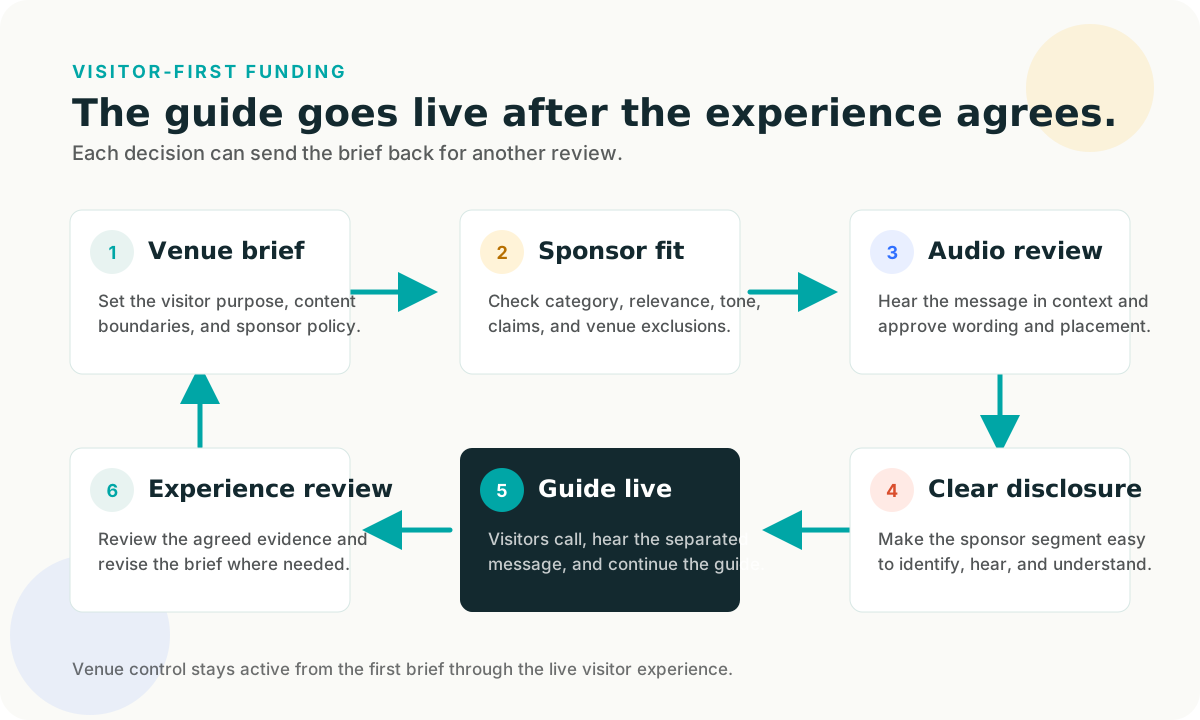
A practical launch workflow
The steps below keep the funding decision connected to content operations. They also make ownership visible when venue staff, a sponsor, an agency, and VoxiGuide all contribute to the same launch.
- Set the visitor purpose
Define the guide, audience, route, tone, and the moments where a commercial segment would be acceptable. Start with the experience, not a sponsor slot.
- Write the sponsor policy
List permitted and excluded categories, sensitive contexts, approval owners, disclosure expectations, and reasons a proposed sponsor could be refused.
- Match the sponsor to the place
Check whether the brand and message have a useful reason to appear in this museum, route, attraction, or destination. Relevance is a review decision, not an automatic targeting claim.
- Review the message in audio
Listen to the sponsor identity, disclosure, offer, pronunciation, pacing, volume, and transition into the guide. Written approval alone cannot show how the segment feels in the call.
- Confirm the operating details
Agree the number type, call-charge wording, placement, timing, language, data handling, available reporting, creative ownership, and escalation path before launch.
- Test the complete call
Call from a real phone, follow the visitor instructions, hear the sponsor segment in context, check every route choice, and record the final approval.
The existing phone audio guide model removes the app-download and hardware-loan steps. It does not remove the need to test signage, call routing, language, audio quality, transcripts, physical access, and alternative visitor support. “No app required” is a delivery choice, not a claim of full accessibility compliance.
Settle these questions before the sponsor message is sold
A useful brief states what is known, what still needs approval, and what the final report can and cannot answer. It should never turn a hope about targeting or measurement into a product promise.
| Workstream | Questions to settle |
|---|---|
| Sponsor policy | Allowed and excluded categories, conflicts, sensitive settings, approval owner, and refusal process |
| Message | Sponsor identity, claim support, usefulness, tone, pronunciation, call to action, and expiry details |
| Disclosure | Wording, timing, volume, cadence, separation from interpretation, and market-specific review |
| Visitor access | Number type, call-charge wording, signage, languages, transcripts, alternative formats, and support route |
| Data and privacy | Data processed, purpose, retention, access, reporting recipients, and any campaign-specific notice |
| Delivery | Available placement, timing, frequency rules, production owner, change control, and incident response |
| Evidence | Available measures, limitations, review questions, reporting format, and decisions the evidence can support |
Publish the actual call terms
Call costs vary by number and market. The UK's Ofcom call-cost guide explains that actual charges can depend on the exact number, provider, and calling plan. For VoxiGuide, the practical rule is simple: confirm the number type and charge wording for the launch market, then place that information where visitors decide whether to call. Do not label access “free” unless both the guide arrangement and call terms support that wording.
Define the data flow before reporting
Agree which data the call setup processes, why it is needed, how long it is retained, who can access it, and what reaches the sponsor. A sponsor-funded guide does not automatically include individual profiles, GPS targeting, retargeting, attribution, or a standard analytics dashboard. Review the VoxiGuide privacy policy and document any additional campaign-specific processing before launch.
Keep advertiser and venue claims separate
Venue teams need clarity on sponsor controls and the visitor experience. Advertisers need clarity on available settings, creative approval, commercial terms, and evidence. The advertiser overview explains the campaign side without turning media language into a venue promise.
Choose sponsorship only when the setting can support it
Sponsor funding is a practical path for venues that want commercial support and are prepared to govern it. It is not the default for every place. The ad-free model is stronger when an institution cannot accept sponsorship, a story needs uninterrupted attention, or the approval burden would outweigh the funding benefit.
| Funding model | Good fit when | Operational tradeoff |
|---|---|---|
| Sponsor-funded | The venue accepts carefully reviewed commercial support and has a credible sponsor-policy process. | Sponsor messages appear in the guide, so disclosure, institutional fit, approvals, and visitor tone need active management. |
| Venue-funded and ad-free | Advertising is inappropriate, the setting is highly sensitive, or the venue wants an uninterrupted listening experience. | The venue funds the service directly and should confirm scope and pricing for its route, content, and operational requirements. |
Make the decision before creative production. A late switch between the models changes disclosure, call structure, commercial terms, approvals, and visitor copy. If the venue is still unsure, scope both paths and name the unresolved policy questions.
Frequently asked questions
What is a sponsor-funded audio guide?
It is an audio guide whose operating cost is supported by agreed commercial sponsor messages. With VoxiGuide, visitors call a published number, the sponsor segment is kept distinct from the interpretation, and the venue reviews sponsor suitability and the listening experience.
Who controls which sponsors can appear?
The venue defines suitable categories, exclusions, approval owners, and tone for its setting. A proposal should not be treated as approved until the venue has reviewed the sponsor, message, placement, disclosure, and complete call flow.
Does a sponsor control the museum or guide content?
The venue should retain control of its interpretation and institutional voice. Sponsor funding should support the guide without changing the accuracy, integrity, or purpose of the visitor content.
How should a sponsor message be identified?
Visitors should be able to understand that the segment is commercial before or as it begins. Review the sponsor identity, disclosure wording, volume, cadence, placement, and transition into guide content for the markets involved.
Is a sponsor-funded guide free for visitors?
Sponsorship can cover the guide service, but call charges may still depend on the number, market, provider, and visitor phone plan. Confirm the number type and publish accurate charge information wherever visitors are asked to call.
What if advertising does not suit the venue?
Use an ad-free venue-funded model. This can be the better fit for memorial sites, sensitive exhibitions, or any organization that does not want commercial messages in the visitor experience.
What reporting is included?
Reporting depends on the technical and campaign configuration. Confirm the measures, data handling, limitations, and reporting format before contracting rather than assuming a standard dashboard, reach estimate, completion rate, or attribution model.