Visitor evidence
Review questions at the welcome desk, group-booking requests, visitor research, and feedback from people who could not use the main-language guide.
Multilingual audio guides
Help more visitors hear the stories of your museum, heritage site, attraction, or route in a language planned for them. VoxiGuide delivers venue-approved audio by phone, without asking people to download an app or borrow a device.
In a nutshell
Ask which visitors need another language to understand the place, then decide how your team will maintain that experience. A long menu is useful only when every option works on site.
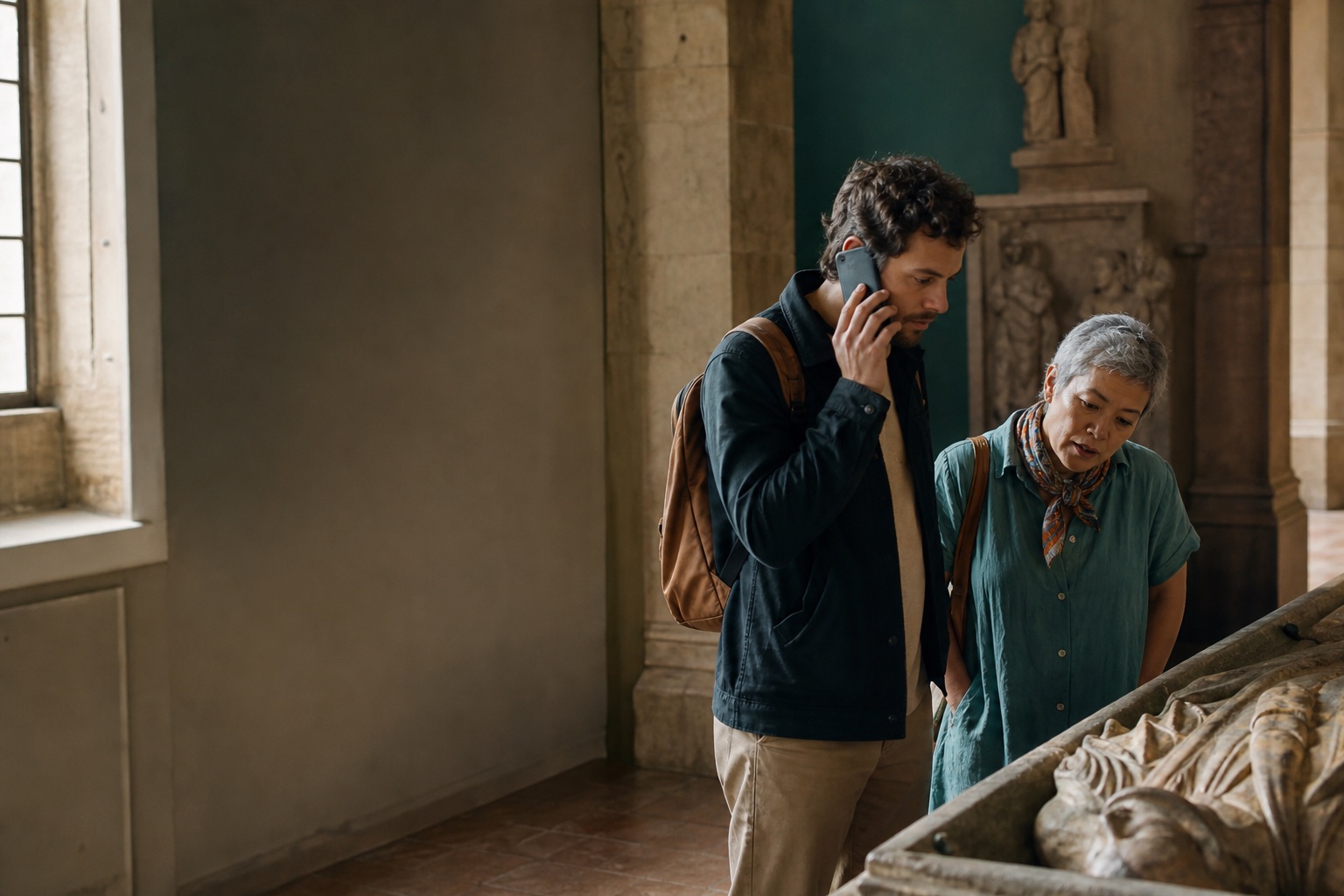
VoxiGuide is a multilingual-ready, phone-based audio guide for museums, heritage sites, attractions, tourism teams, and outdoor routes. Visitors call a published number and listen without an app download. Venues approve the interpretation, while the exact languages, selection flow, phone setup, and call-charge wording are confirmed for each project.
Choose the first languages
Start with a short, defensible language plan. A smaller set of well-reviewed journeys is more useful than a long list the team cannot test or keep current.
Review questions at the welcome desk, group-booking requests, visitor research, and feedback from people who could not use the main-language guide.
Compare the languages requested by visitors at the venue with the audiences reached through tourism partners, schools, tour operators, and local communities.
Look for search terms in other languages, enquiries to visitor services, and repeated questions that reveal where translated interpretation would be useful.
The UK Government Digital Service recommends looking for translation needs in other-language search terms, contact-centre calls, and translation requests, then arranging high-quality translation and keeping it current. See its guidance on planning translations.
Language workflow
Translation is one stage. The invitation, caller prompts, stop labels, names, recording, and maintenance owner all need the same care.
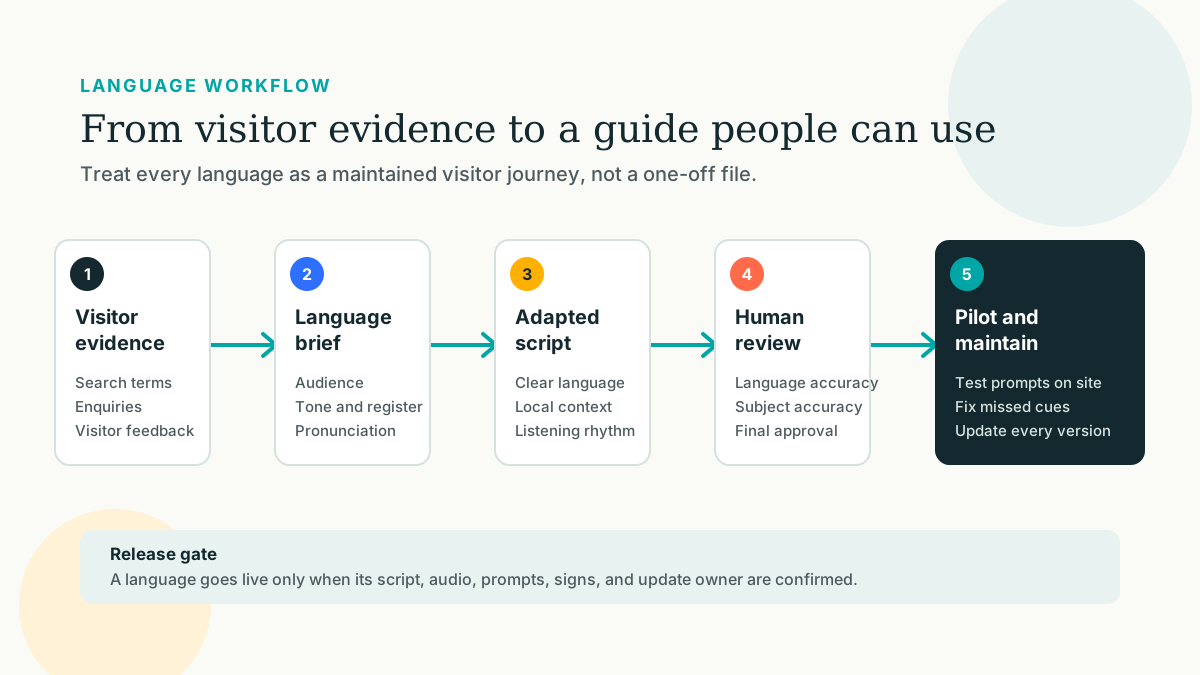
Define the audience, purpose, tone, reading level, names, pronunciation, and sensitive terms before translation starts.
Remove idioms, unexplained references, and long sentences. A clear source script reduces ambiguity in every language that follows.
Protect the meaning while adjusting register, examples, dates, names, and cultural context for the intended listeners.
Use both language expertise and curatorial or local knowledge. One checks natural expression; the other protects the interpretation.
Test the complete journey: the invitation, language prompt, stop choice, pronunciation, pacing, sound quality, and next action.
Adaptation and review
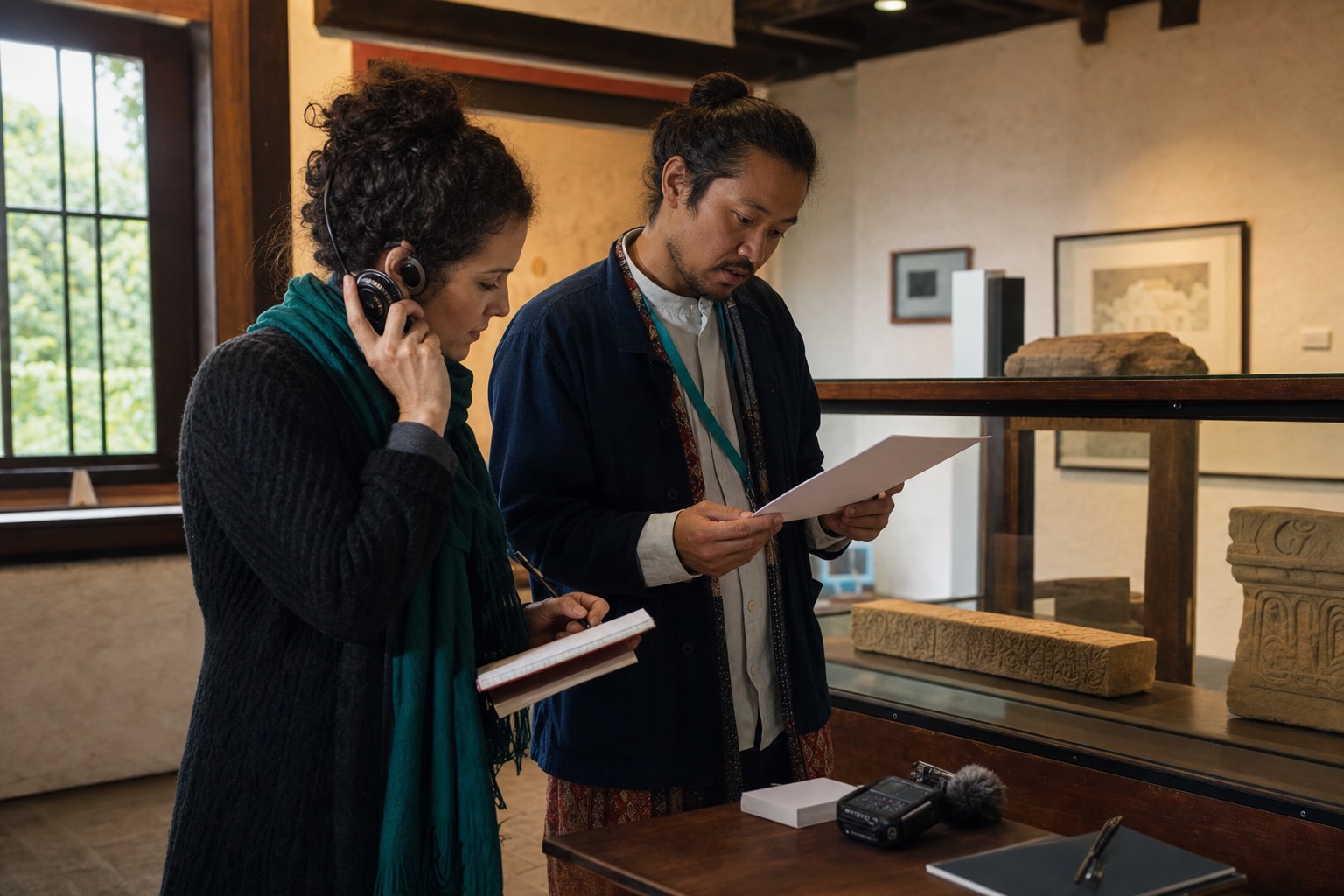
A literal version can be accurate and still sound distant, confusing, or unnatural. Give language reviewers the visitor context, the object or place, pronunciation notes, and the reason each stop exists.
The UK Home Office's user-centred design guidance advises teams to avoid idioms and phrasal verbs, check how wording translates, and test important labels and instructions with people who have limited English. It also warns that online translation tools are only a guide. Read the limited-English content guidance.
On-site language choice
A translated guide cannot help if visitors miss the invitation or cannot recognise their language. Test the wording where people arrive, the sequence they hear after calling, and the path back if they choose the wrong option.
The broader self-guided tour workflow starts with the real route. For multilingual delivery, walk it again with visitors who use each launch language and watch where they hesitate.
Test the complete prompt
Launch brief
This keeps public claims aligned with the guide that visitors will actually hear. It also creates a clear owner for future changes.
Owner: Venue and language lead
Owner: Venue editorial lead
Owner: VoxiGuide and venue
Owner: VoxiGuide and venue
Owner: Named content owner
Plan the practical setup
Bring your visitor evidence, source scripts, target languages, route, and launch date. VoxiGuide can then confirm the phone setup and project scope without relying on a generic feature promise.
Language and accessibility
A guide in a visitor's language can remove a communication barrier. It does not replace transcripts, readable alternatives, assistive listening, physical access, audio description, sign-language provision, or an accessibility review.
The U.S. National Park Service says accessibility should be planned across the full mix of interpretive media, with alternative formats filling gaps where one medium cannot serve everyone. Its interpretive-media accessibility guidance calls for early planning with diverse audiences rather than a boilerplate compliance statement.
Keep the checks separate
Venue applications
The National Park Service recommends choosing interpretive media around the message, audience, and resources, including primary languages, literacy patterns, and cultural differences. See its interpretive-media selection guidance.
Plan language versions around collections, rooms, temporary exhibitions, family visits, and school-group needs.
See museum use casesUse visitor-origin patterns and tourism-partner insight to prioritize languages for city walks and destination stories.
See tourism use casesAdd language expertise without losing the nuance of names, contested histories, sacred terms, and local voices.
See heritage use casesVoxiGuide offers sponsor-funded and venue-funded paths. Keep sponsor messages clearly separate from interpretation, apply venue category controls, and confirm the commercial setup before launch.
Compare funding pathsFAQ
It is an audio guide that makes interpretation available in more than one language. With VoxiGuide, visitors call a published phone number. The exact languages and language-selection flow are scoped for the venue before launch.
VoxiGuide does not publish a fixed language list. Confirm the languages, regional variants, recording needs, and call flow for your venue before promoting availability.
Do not assume automatic translation. Agree who provides, adapts, reviews, records, and approves each language as part of the project scope.
The selection method depends on the agreed phone setup. VoxiGuide and the venue should confirm the caller prompts, signage, and language-routing flow before publication.
No. Visitors call the guide number published by the venue and listen from their phone.
Language access and disability access are related but different. Plan transcripts, readable alternatives, physical access, assistive listening, audio description, and other needs with qualified accessibility guidance.
That depends on the number type, market, and the visitor's phone plan. Confirm the setup and display any normal call-charge wording clearly before launch.
Tell us about your visitors, venue, source content, target languages, call market, and launch priorities.