

For media planners, contextual audio advertising means choosing or shaping a commercial message from the environment in which the audio is heard. In museums, attractions, and tourism routes, that environment includes the place, the visitor's listening task, and venue-approved sponsor rules without assuming a detailed profile about the individual listener.
In a nutshell
- Digital audio advertising is the broad category; contextual audio is one way to decide where a message fits.
- The main signal is the surrounding content or environment, not necessarily an individual's past behavior.
- For visitor guides, context can include the venue, route, guide chapter, and practical moment in the visit.
- A useful placement needs clear sponsor disclosure, venue review, and confirmed data handling.
- Campaign inventory, pricing, and reporting should be agreed before launch rather than inferred from broad media language.
Contextual audio advertising in practice
Contextual advertising selects or shapes a message using the environment around it. The IAB Europe Guide to Contextual Advertising defines contextual targeting as serving an ad based on the content and environment in which it appears, rather than data about the person receiving it. The guide also makes clear that context can include audio, location, language, images, and other signals.
Audio adds one practical requirement: the message has to make sense when heard, not merely when seen. The sponsor identity, disclosure, next step, and any limitation must be easy to follow without a screen. The surrounding content should give the advertiser a legitimate reason to be present.
How contextual audio fits into digital audio advertising
Digital audio advertising spans several kinds of listening. The IAB Europe Buyer's Guide to Digital Audio describes a category that includes spoken-word content, podcasts, music, and streaming audio. A contextual campaign can operate within those formats, but it adds an explicit question: what does the surrounding content or environment tell us about the appropriate message?
VoxiGuide applies that question to phone-based visitor guides. A listener chooses to call a guide connected to a museum, route, attraction, or destination. The campaign can then be planned around the known guide setting and approved sponsor rules. The visitor flow remains content-first: call, hear a clearly separated sponsor segment when present, then continue with the guide.
Contextual audio vs behavioral and broad audio buys
Most audio advertising is targeted in some way. The important distinction is what the message is targeted on. The UK's Information Commissioner's Office guidance separates contextual advertising based on current content from behavioral advertising based on known or inferred interests, characteristics, and activity over time. That guidance covers online advertising, so teams should not copy its legal conclusions blindly into another medium. The planning distinction is still useful.
| Approach | Primary signal | Useful for | Main watchout |
|---|---|---|---|
| Broad audio buy | Publisher, programme, format, or general audience package | Building reach across an audio environment | The listener's immediate setting may vary widely |
| Behavioral or personalized audio | Known or inferred interests, characteristics, or activity | Audience-led planning where the necessary data use is lawful and agreed | Profiling, consent, transparency, and data-sharing rules need close review |
| Contextual audio | The content, environment, topic, language, or moment around the audio | Matching creative to a relevant listening setting | Context still needs brand-suitability and disclosure controls |
| Place-based visitor-guide audio | An approved venue, route, guide chapter, and visitor task | Cultural sponsorship and useful nearby next steps | Inventory, placement, venue approval, data use, and reporting must be confirmed |
What context means inside a visitor guide
A visitor guide carries more than a content topic. It has a physical setting, an institutional owner, a visitor task, and a tone. A message that fits a city route may feel wrong at a memorial site. A sponsor that suits a family attraction may fall outside a museum's category policy. "Cultural context" is not one inventory label.
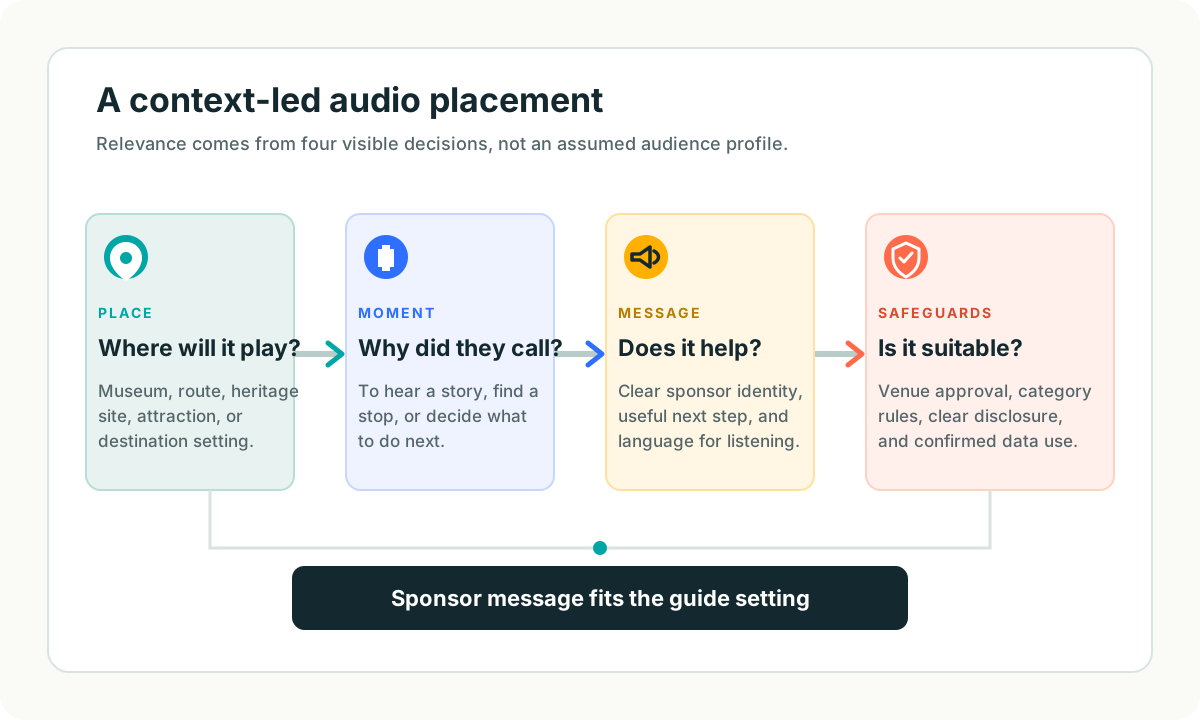
- Name the place. Start with an available museum, route, attraction, heritage site, or outdoor setting.
- Describe the listening moment. State why the visitor called and what they may reasonably need next.
- Write for the ear. Keep the sponsor identity, message, and next step clear without relying on visual fine print.
- Apply venue safeguards. Confirm sponsor category, tone, disclosure, placement, data use, and final approval.
This place-first model should not be sold as automatic behavioral, demographic, GPS, or retargeting capability. Those are different claims and require separate product, privacy, and legal confirmation.
The campaign planning map
The four decisions below form one review loop. If the place, moment, message, and safeguards do not agree, revise the brief before pricing or production.
What a useful campaign brief should contain
A useful brief makes uncertainty visible. It says which settings are available, what still needs venue approval, and which questions the eventual report should answer. It does not turn an audience assumption into a product feature.
| Brief field | What to settle |
|---|---|
| Place | Venue, route, destination, or group of approved settings |
| Visitor moment | What the listener is doing and what could be useful next |
| Campaign goal | Awareness, cultural sponsorship, nearby discovery, or another agreed outcome |
| Sponsor fit | Category, offer, local relevance, exclusions, and institutional sensitivity |
| Creative | Message, disclosure, language, voice, pronunciation, and production owner |
| Delivery | Available inventory, placement, timing, frequency rules, and technical configuration |
| Evidence | Which measures are available, how data is handled, and what the report cannot show |
Venue type changes the brief. A museum setting may prioritize curatorial separation and category exclusions. A city tourism route may need coordination across several public and private partners. An outdoor trail may put greater weight on clear instructions and appropriate local services.

Disclosure, brand safety, and privacy checks
Make the commercial segment identifiable
The current CAP Code on recognition of marketing communications requires commercial intent to be clear when it is not obvious from the context. The US Federal Trade Commission's native advertising guidance says multimedia disclosures should appear close to the advertising message. For audio, the wording, volume, and cadence should be easy to hear and understand. These are useful transparency benchmarks, not a substitute for market-specific legal review.
Treat brand suitability as a shared decision
The IAB Tech Lab Content Taxonomy describes contextual targeting and brand safety as common uses of content classification. In a visitor setting, classification is only a starting point. The venue should still review the sponsor category, message, placement, and tone.
VoxiGuide's advertiser overview separates sponsor packages from the visitor content itself. Final category exclusions and approvals should be documented for the venue rather than implied by a general "brand-safe" label.
Confirm the exact data flow
Contextual does not automatically mean no data is processed. Confirm which signals select the message, what call or interaction data is stored, who receives campaign reports, and how long information is retained. Review the current VoxiGuide privacy policy, then document any campaign-specific processing before launch.
Contextual audio planning examples
These examples show how a planner can connect setting, sponsor fit, and visitor safeguards. They are not a promise that a particular venue, category, or placement is available.
Planning example
Museum visit
Known context: A visitor is listening to interpretation inside a cultural venue.
Possible fit: A clearly identified cultural sponsor whose category and wording the museum approves.
Guardrail: Keep the sponsor segment separate from curatorial interpretation.
See the museum audio settingPlanning example
City walk
Known context: A visitor is following a route and may be choosing the next stop.
Possible fit: A nearby café, mobility service, attraction, or destination partner with a practical next step.
Guardrail: Do not present assumed location, intent, or availability as a verified personal fact.
See the city tourism settingPlanning example
Heritage route
Known context: A listener is moving through a place where tone and institutional trust matter.
Possible fit: A restrained sponsor message that supports access to the guide.
Guardrail: Apply venue-specific category exclusions and sensitivity review.
See the heritage settingPrivate attractions and public routes need their own review, too. Compare the operational needs of an attraction setting with the institutional sensitivities of a heritage site before reusing the same script.
Set measurement and pricing expectations before launch
A contextual campaign can be relevant without supporting every measurement method a media buyer is used to. Ask what the available setup can report, which decisions that evidence can inform, and where the limits sit. Do not promise reach estimates, completion rates, attribution, or individual-level behavior until the configuration and data handling have been confirmed.
Pricing follows the same rule. Available inventory, geography, timing, placement, creative work, and sponsorship scope shape the proposal. The VoxiGuide pricing overview explains the wider funding model, while the advertiser team confirms campaign-specific terms.
Frequently asked questions
What is contextual audio advertising?
Contextual audio advertising matches an audio message to the content or environment in which it is heard. The context might be a podcast topic, a radio programme, a guide chapter, a museum, a route, or another known setting.
How is contextual audio different from digital audio advertising?
Digital audio advertising is the broader category of advertising delivered around audio content. Contextual audio is one planning approach within that category: it selects or shapes the message using the surrounding content and environment.
Does contextual audio advertising use personal data?
Not necessarily. A campaign can be planned around content or place without using a personal profile to choose the message. However, contextual systems can still process data, so advertisers should confirm the exact signals, storage, measurement, and consent requirements for each setup.
How should an audio sponsor message be disclosed?
Listeners should be able to understand that the message is commercial before or as it begins. Disclosure wording, timing, volume, cadence, and market-specific requirements should be reviewed as part of production.
Where can place-based contextual audio ads run?
They can be planned for available visitor-guide settings such as museums, city routes, heritage sites, attractions, and outdoor trails. Exact inventory, timing, placement, and venue approvals depend on the campaign proposal.
How is a contextual audio campaign measured?
Measurement depends on the inventory and technical configuration. Agree the available measures, data handling, limitations, and reporting format before contracting rather than assuming a standard dashboard or attribution model.
How much does contextual audio advertising cost?
Cost depends on available inventory, geography, timing, placement, creative needs, and sponsorship scope. VoxiGuide confirms those details in a campaign proposal; no public rate card is currently approved.